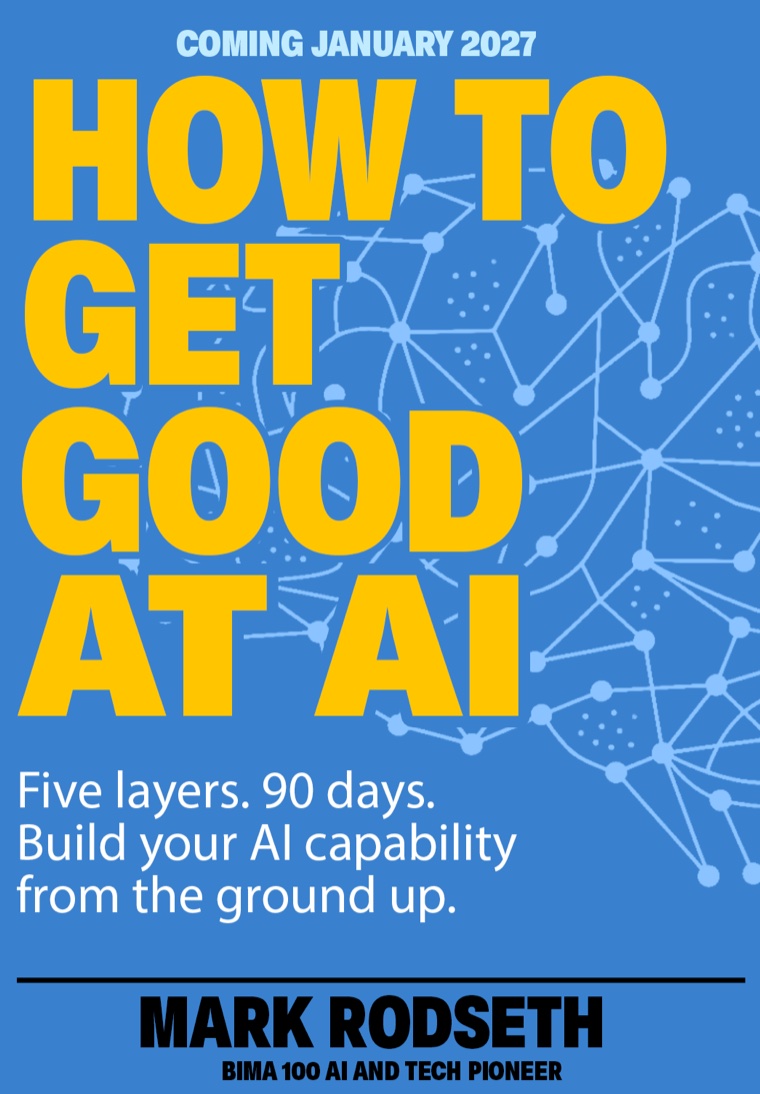
How to
Get Good
at AI
Five layers. 90 days. Build your AI capability from the ground up.
Turning AI potential into a real capability starts with you.
A free 12-question assessment. Find your strengths, your gaps and what to work on next. About 3 minutes.
Or play The Slopocalypse: find the AI slop and name its pattern. New levels land until launch.
Or try this week's AI prompt, ready to copy and paste. New ones land on Mondays until launch.
CTO, MSQ DX · BIMA 100 AI & TECH PIONEER · DESIGNED AI CERTIFICATION ACROSS A 6,000-PERSON COMPANY · BBC RADIO 4, THE ARTIFICIAL HUMAN
A small number of people are pulling away from the pack. The technology isn't the differentiator. How they use it is.
Everyone has access to AI.
Not everyone has built the capability to use it well.
Millions of people have the same increasingly powerful models. What sets people apart is what they build around them: the knowledge they give AI, how they brief it, the capabilities they reuse, the workflows they redesign and the work they eventually delegate.
This book is for you if AI at work feels overwhelming, you're stuck on prompting, or it isn't giving you the results you think it should.
Introducing the AI Capability Stack.
A framework for building real capability with AI, one layer at a time.
It has five layers. From the bottom up: your Personal Operating System, Knowledge, Prompts, Skills and Agents. Each adds a new level of capability and depends on the ones beneath it, so you build from the bottom up, starting with how you think, work and make decisions.
Workflows sit outside the layers. They are how you bring the layers together in the work you already do.
Tools and models change every month. These building blocks keep turning up underneath them, which is why the Stack holds while the technology moves.
The five layers of the AI Capability Stack
- Your Personal Operating System: change how you work. The first layer is how you think, work, make decisions and exercise judgement, and every layer above runs on it.
- Knowledge: give AI what it needs to know. Knowledge gives AI the information it needs to do good work.
- Prompts: tell AI what you need. Prompts direct the work, built on the knowledge beneath them.
- Skills: make good work reusable. Skills turn effective instructions into reusable capabilities.
- Agents: let AI do more of the work. Agents carry out parts of the work with greater independence.
Build your own AI Capability Stack.
Each layer gets its own chapter. You learn the idea, practise it through activities as you read, then finish the chapter with a build exercise. Each build adds a layer to one project that runs through the book: your own AI Capability Stack, a personal knowledge system fitted to your work.
- 01 LEARNThe big idea behind the layer.
- 02 PRACTISEActivities through the chapter to try it on your own work.
- 03 BUILDA build exercise at the end that adds the layer to your Stack.
WHAT YOU BUILD, LAYER BY LAYER
- Personal Operating SystemA one-page policy for how you work with AI.
- KnowledgeFour short, focused files AI can draw on: your AI policy, a Dossier, a Voice file and an overview for each active project.
- PromptsTwo prompts that add a new project and keep it up to date from the notes you jot during the week.
- SkillsThose prompts turned into Skills, plus a clean-up Skill that flags projects falling behind and suggests what to archive.
- AgentsAn upkeep agent with a character of its own that reviews your projects each Friday, picks the Skill each one needs and asks before it changes anything.
Then, in Chapter 12, you map a workflow you already run and rebuild it with the layers, one step at a time.
The result: a knowledge store that stays current and an agent that keeps it that way under your supervision, built by you and fitted to your work.
Ideas you can see.
Every chapter comes with comic-style illustrations. Each one takes an idea, a concept or a process and lays it out on a single page, so it sticks and is easy to come back to.
-
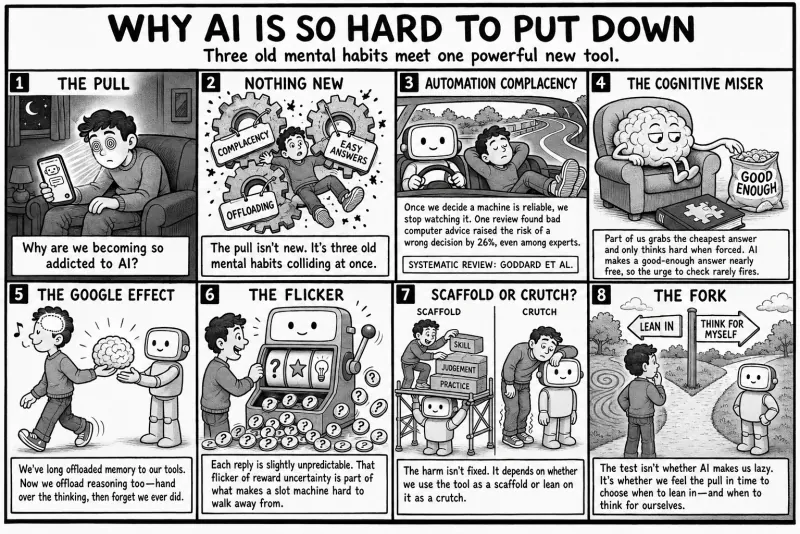
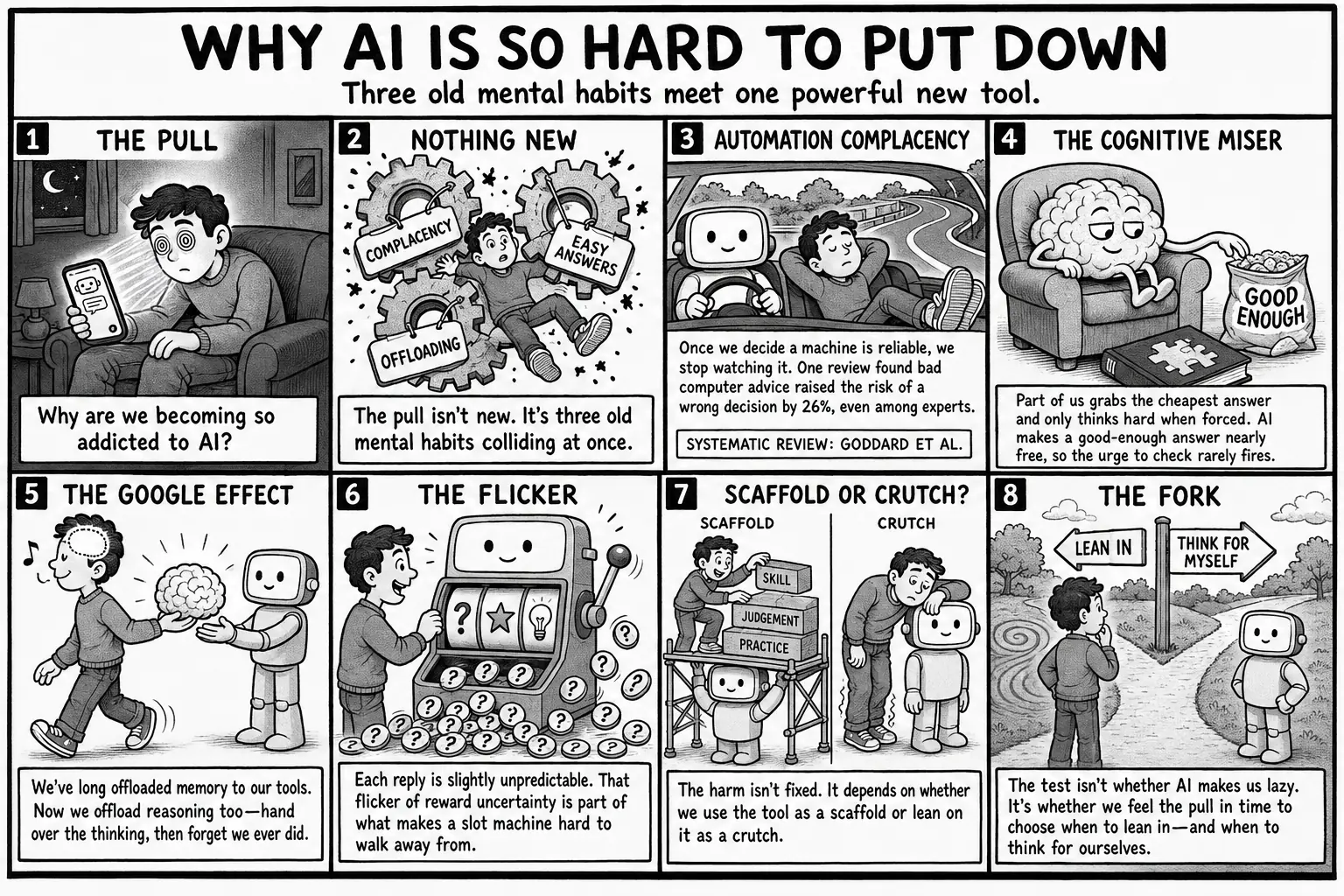
CHAPTER 04Why AI is so hard to put downThree old mental habits meet one powerful new tool. -
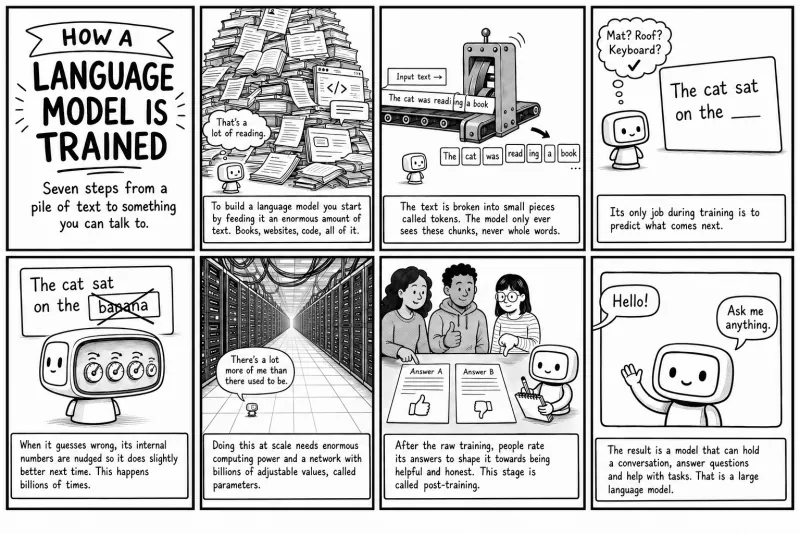
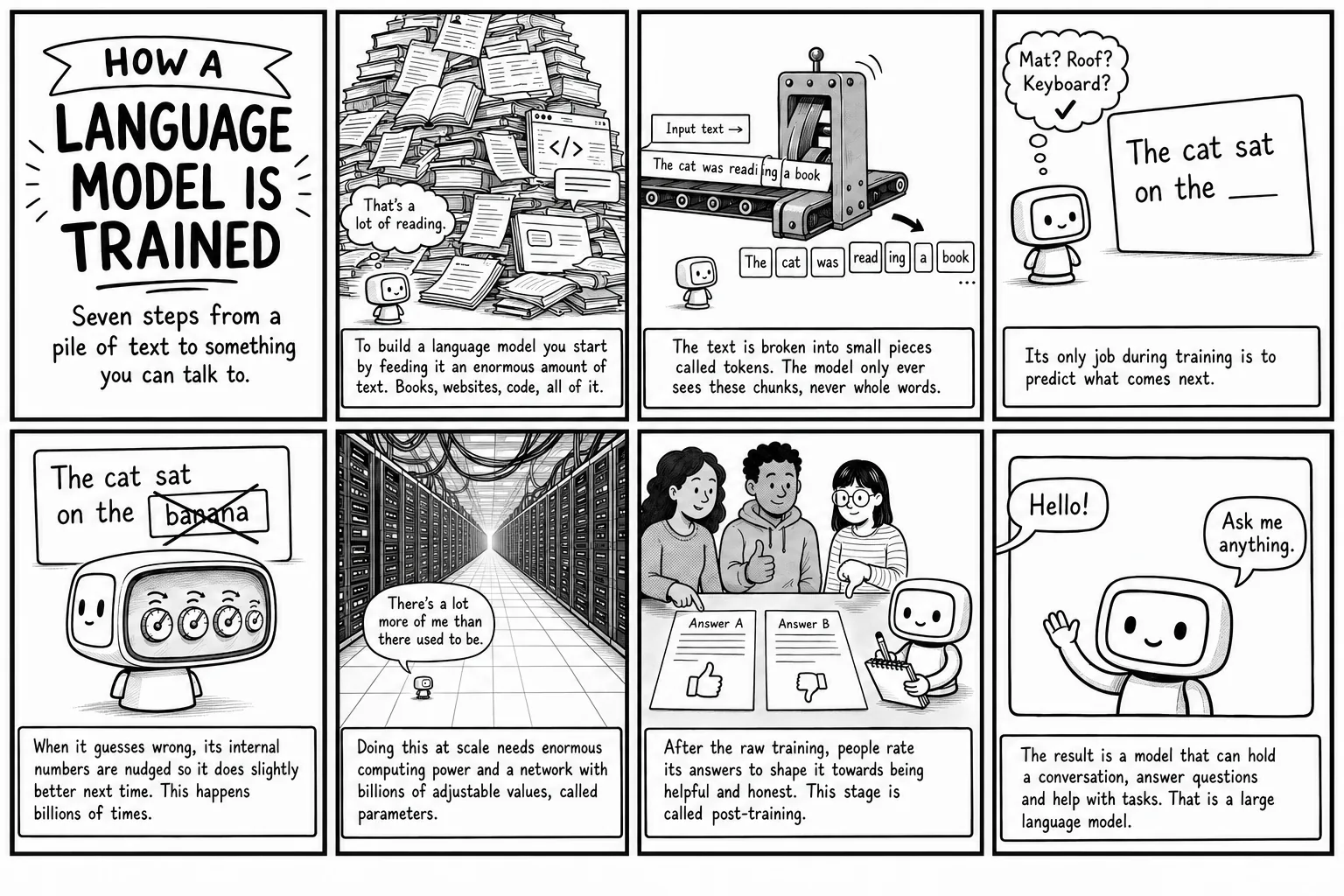
CHAPTER 03How a language model is trainedSeven steps from a pile of text to something you can talk to. -
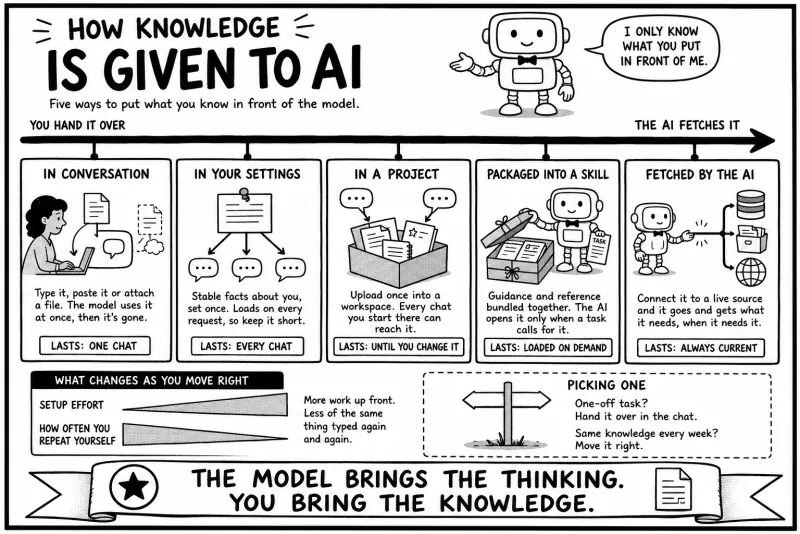
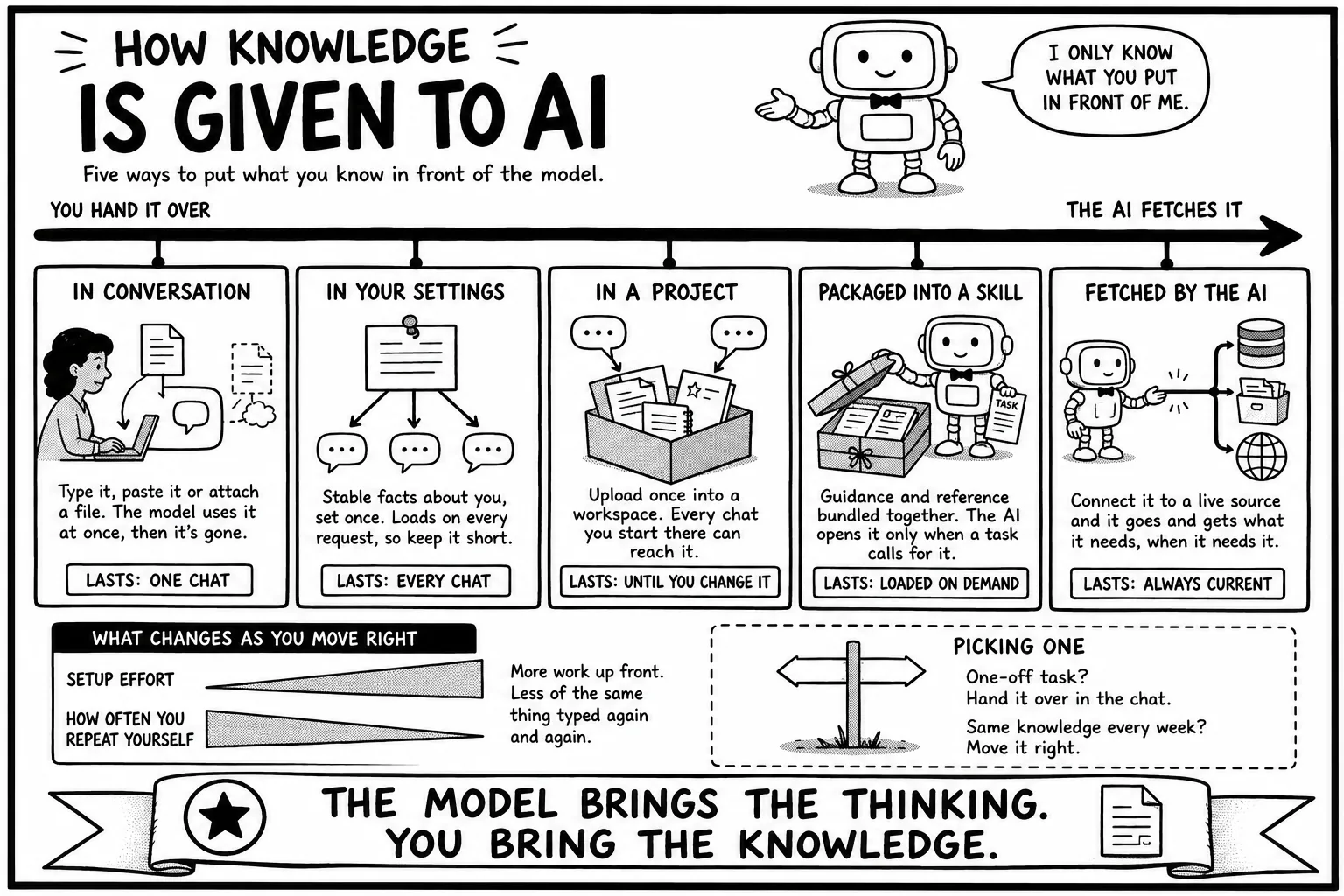
CHAPTER 08How knowledge is given to AIFive ways to put what you know in front of the model. -
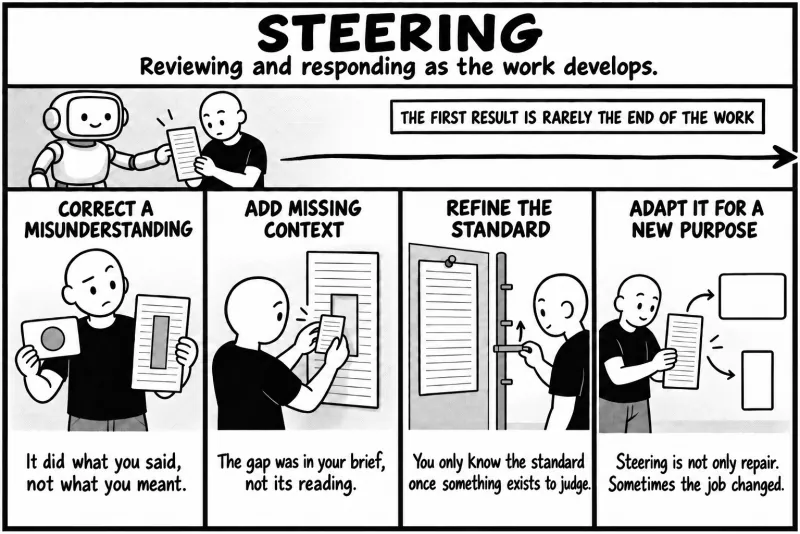
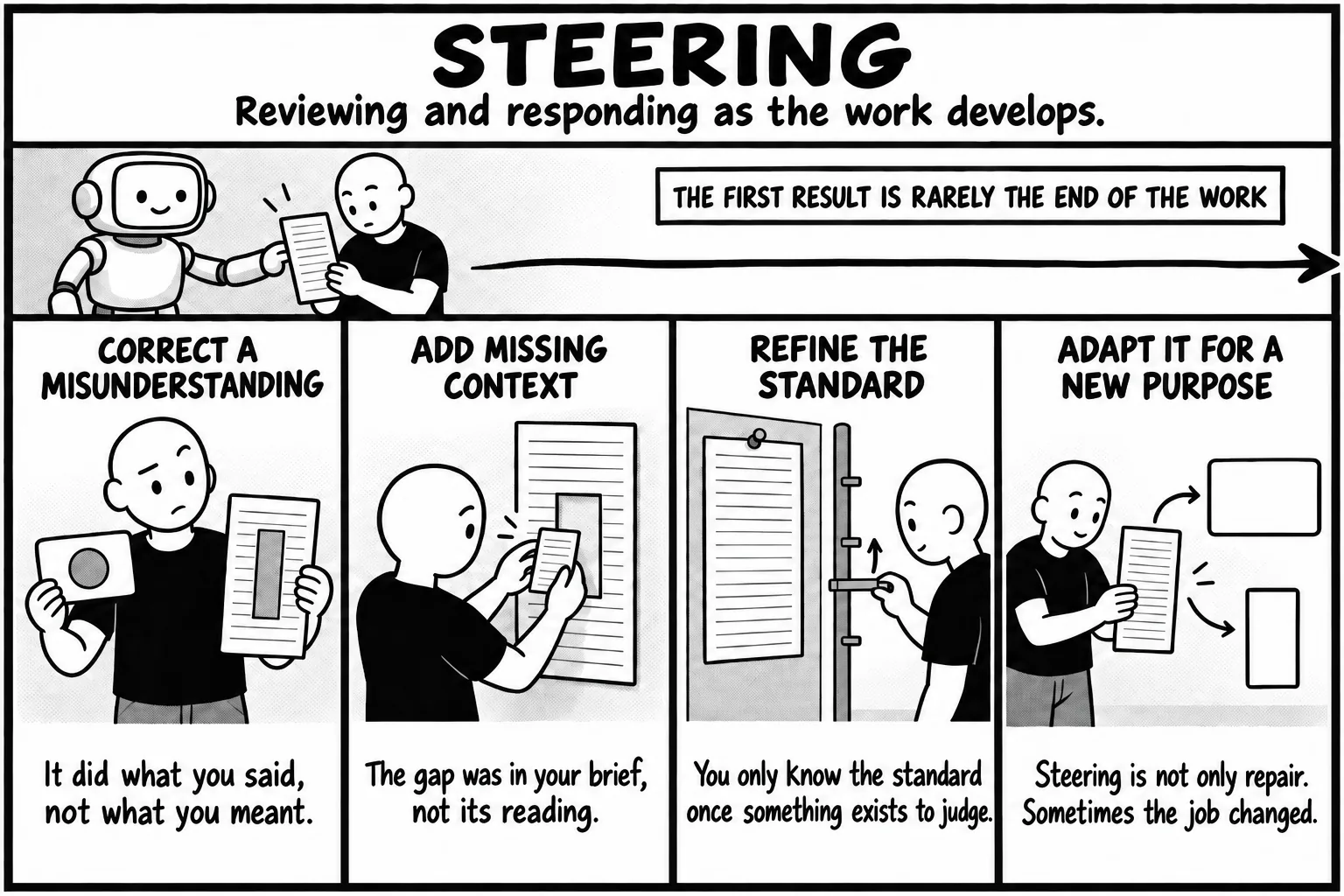
CHAPTER 09SteeringFour ways to redirect the work once the first result arrives.
From using AI to building capability with it.
BEFORE
- AI as a chatbot
- One-off prompts
- Inconsistent results
- Repeated explanation
- Manual processes
- Constantly chasing new tools
AFTER
- AI as a capability
- Knowledge AI can draw on01
- Instructions that say what you want02
- Set up once, applied when needed03
- Steps that run in an order you set04
- Give it a goal; it works out the steps05
And underneath it all is you.
The more work AI does, the more your judgement matters. Bolting AI onto old ways of working captures only a fraction of its potential. The way you work has to change too.
- How you think
- How you decide
- How you review
- How you learn
- Taking responsibility for the result

Read the first six chapters free.
What AI actually is, how I got here, and the evidence behind the chasm between the few getting real results from AI and everyone else. Then a short history of AI and the AI Capability Stack itself. A pre-publication preview of How to Get Good at AI, out in January, sent to you as a PDF now.
Thanks. You're on the list.
AI will keep
getting better.
So can you.
© 2026 MARK RODSETH